INDUSTRY:
Fintech
TYPE:
Self-Initiated Conceptual Product Design
YEAR:
2026
Timeline:
20 Days
Project Overview.
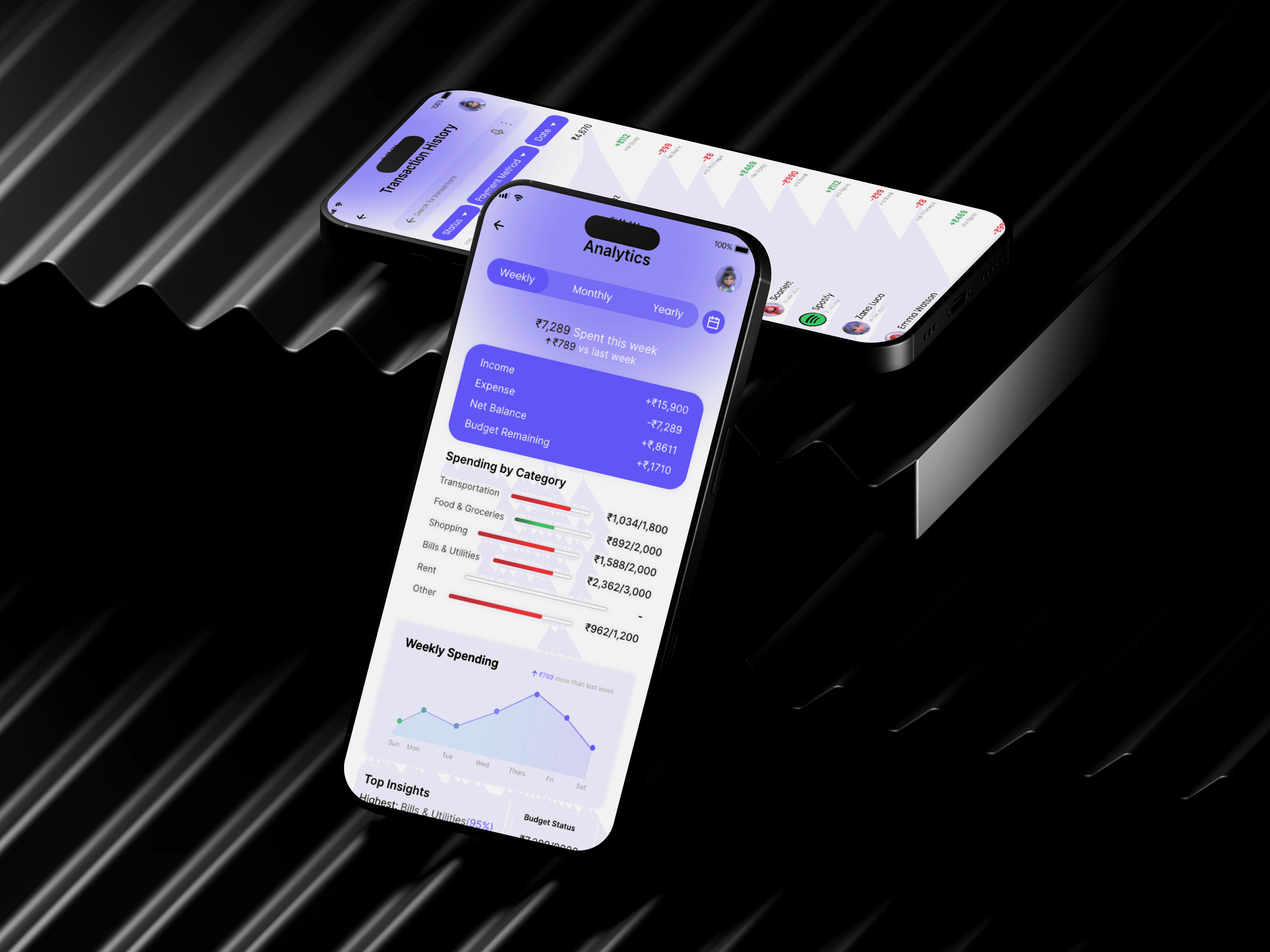
Walletix is a self-initiated mobile budgeting app designed for modern Indian professionals navigating a digital-first payment ecosystem. As UPI and card-based transactions become frictionless and frequent, financial awareness often decreases. While most budgeting apps focus primarily on spending categories, they rarely address how different payment methods influence spending behavior. Walletix explores this gap by introducing payment-method-based tracking, structured analytics, and instant budget visibility. The goal was to design a clear, behavior-aware financial experience that prioritizes hierarchy, reduces cognitive load, and helps users understand not only what they spend — but how they spend.
Problem Statement.
As India rapidly shifts toward UPI and digital payments, spending has become faster and more frictionless — but financial awareness has not evolved at the same pace. Working professionals use multiple payment methods daily, yet most budgeting apps focus only on spending categories rather than payment behavior. This limits users’ ability to understand how different platforms influence their spending patterns, making it harder to maintain budget control in a digital-first environment.
Core Insight.
As digital payments become frictionless, the “pain of spending” decreases — making it easier for users to lose awareness of how their money flows. While budgeting apps categorize expenses, they often overlook the behavioral impact of payment methods. Financial clarity improves when users can see not just what they spend, but how different platforms shape their spending habits.
Key Decisions.
To ensure Walletix remained focused and behavior-driven, several strategic design decisions were made:
1. Prioritized Remaining Budget Over Total Spent
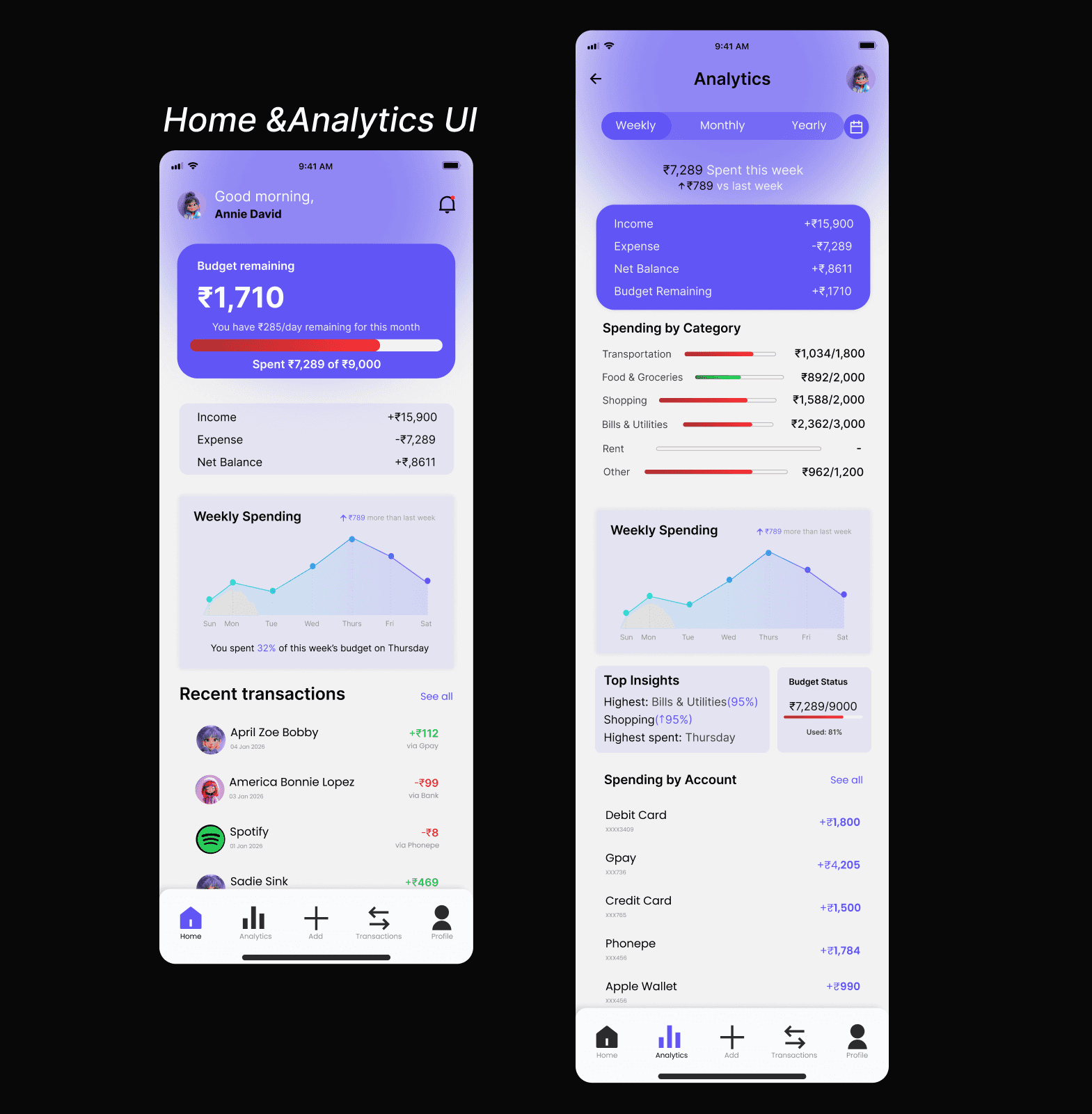
The Home screen emphasizes budget remaining rather than total expenditure, aligning with the user’s primary goal — financial control.
2. Introduced Payment-Method-Based Tracking
Instead of limiting analytics to categories, spending is also analyzed by payment method to surface behavioral patterns.
3. Layered Analytics Structure
Analytics are presented progressively — starting with summary context before deeper breakdowns — reducing cognitive overload.
4. Simplified Feature Scope
Advanced features such as savings goals and forecasting were intentionally excluded to maintain clarity and focus on core budgeting behavior.
5. Structured Settings Through Grouping
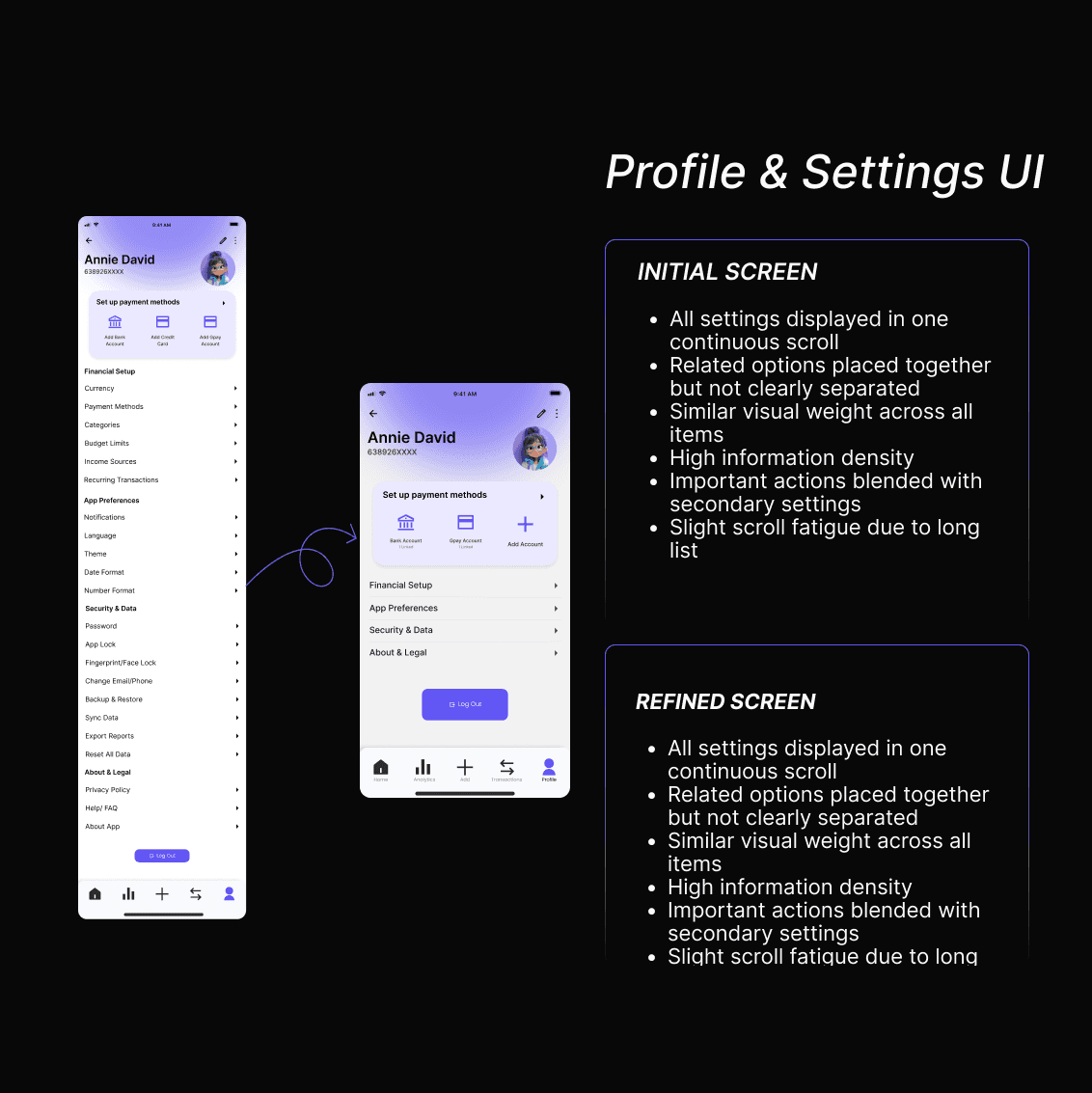
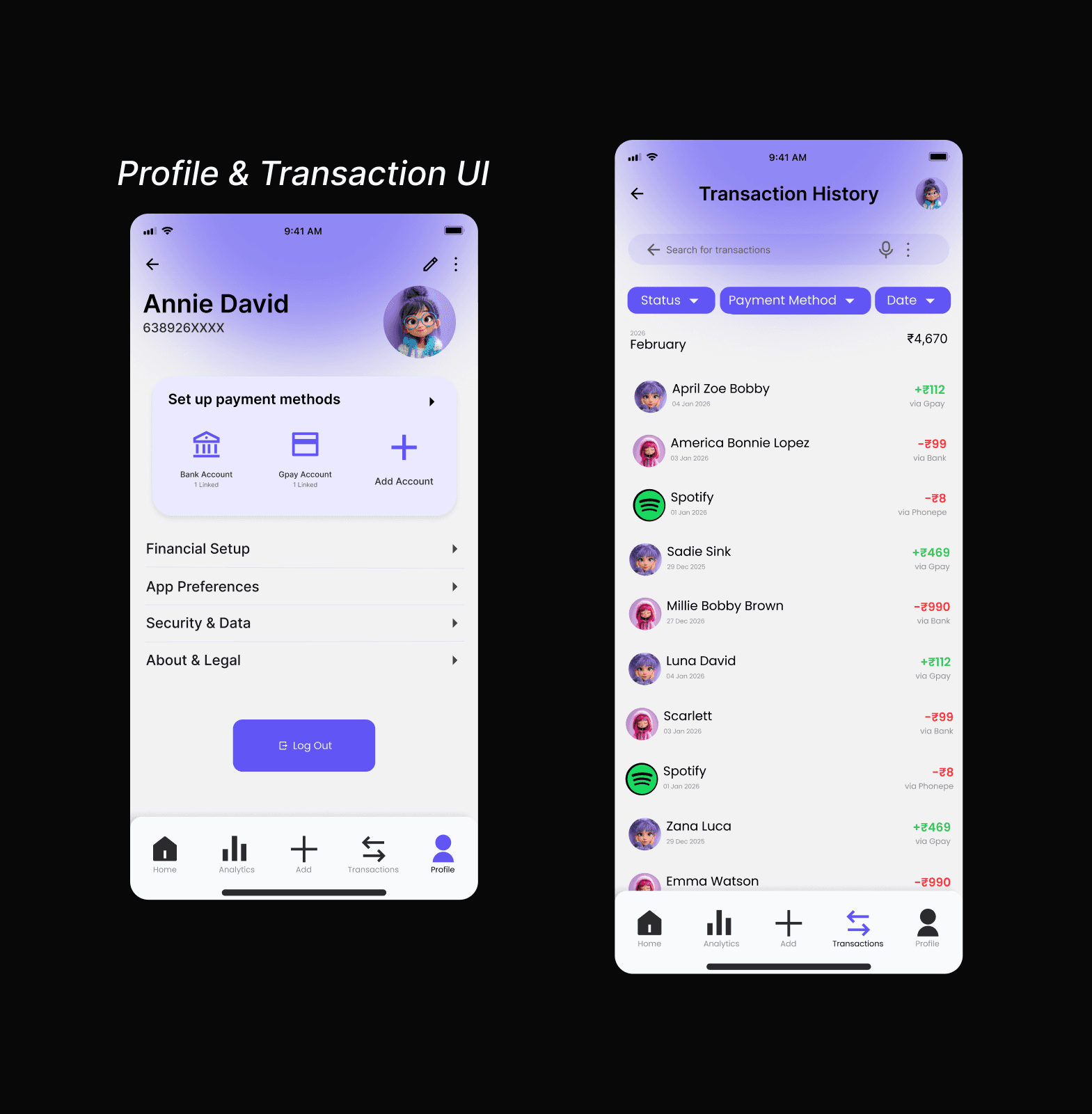
Profile and settings were reorganized into clear sections to improve scan-ability and reduce decision fatigue.
Iteration.
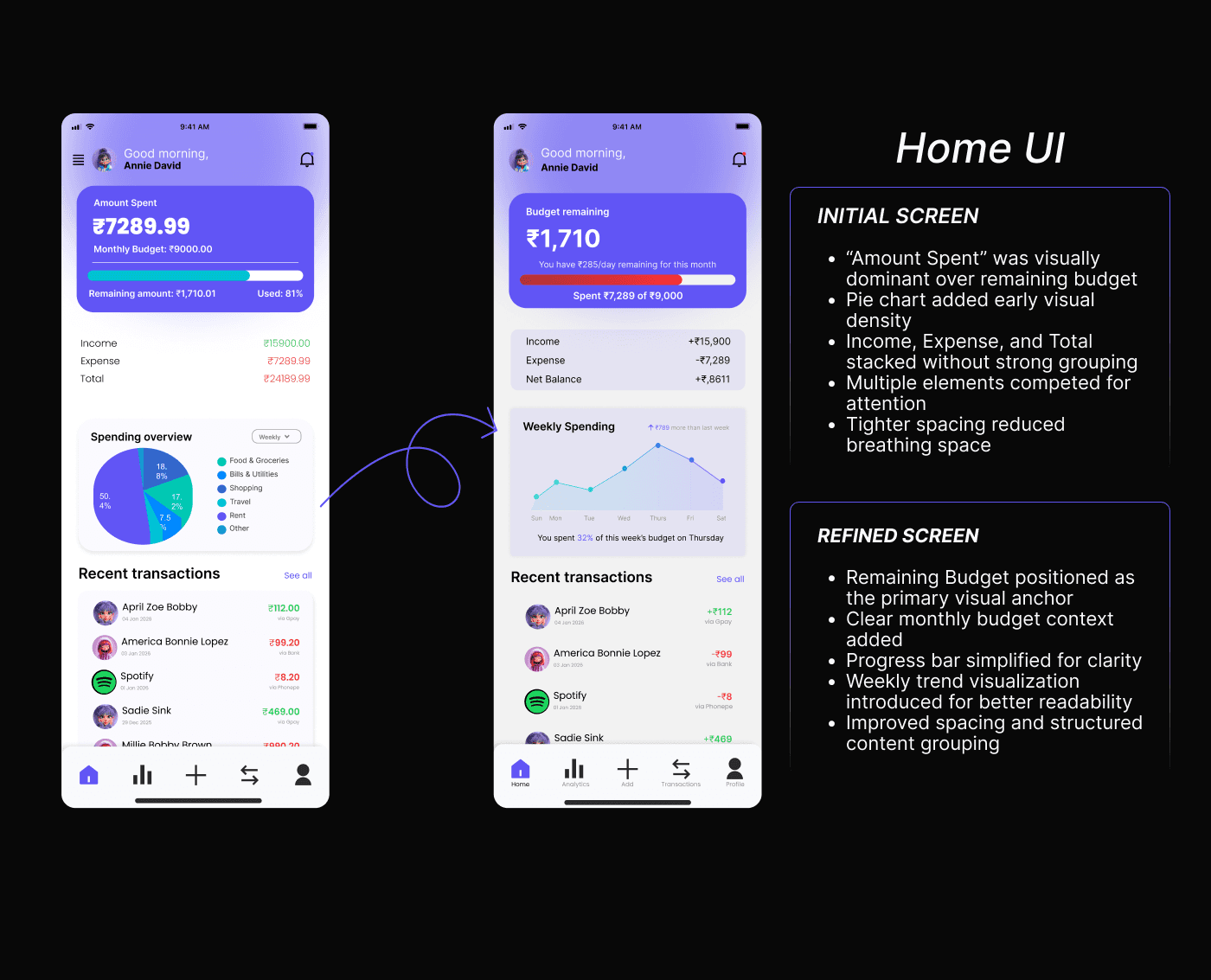
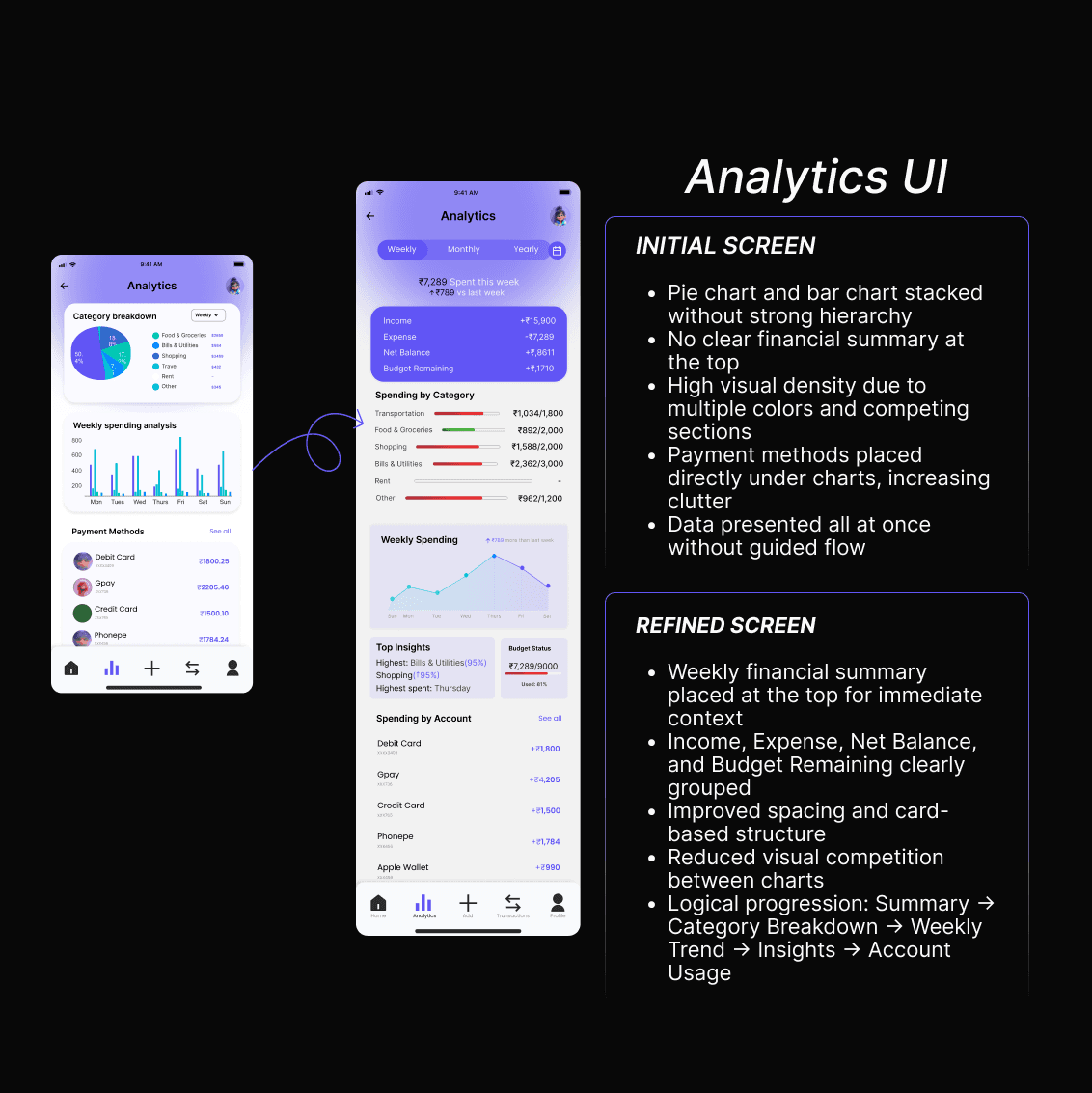
The initial version of Walletix prioritized adding multiple financial elements within a single screen. While functionally complete, the layout lacked clear hierarchy and visual focus, making it harder for users to instantly understand their budget health.
Through iteration, I shifted the design approach from feature density to structured clarity. Key improvements included:
Repositioning remaining budget as the primary visual anchor
Reducing competing elements on the Home dashboard
Restructuring analytics into layered insights
Improving spacing and content grouping
Simplifying profile settings through clear categorization
This iteration marked a transition from designing feature-rich screens to designing focused, behavior-aware experiences.
System Architecture.
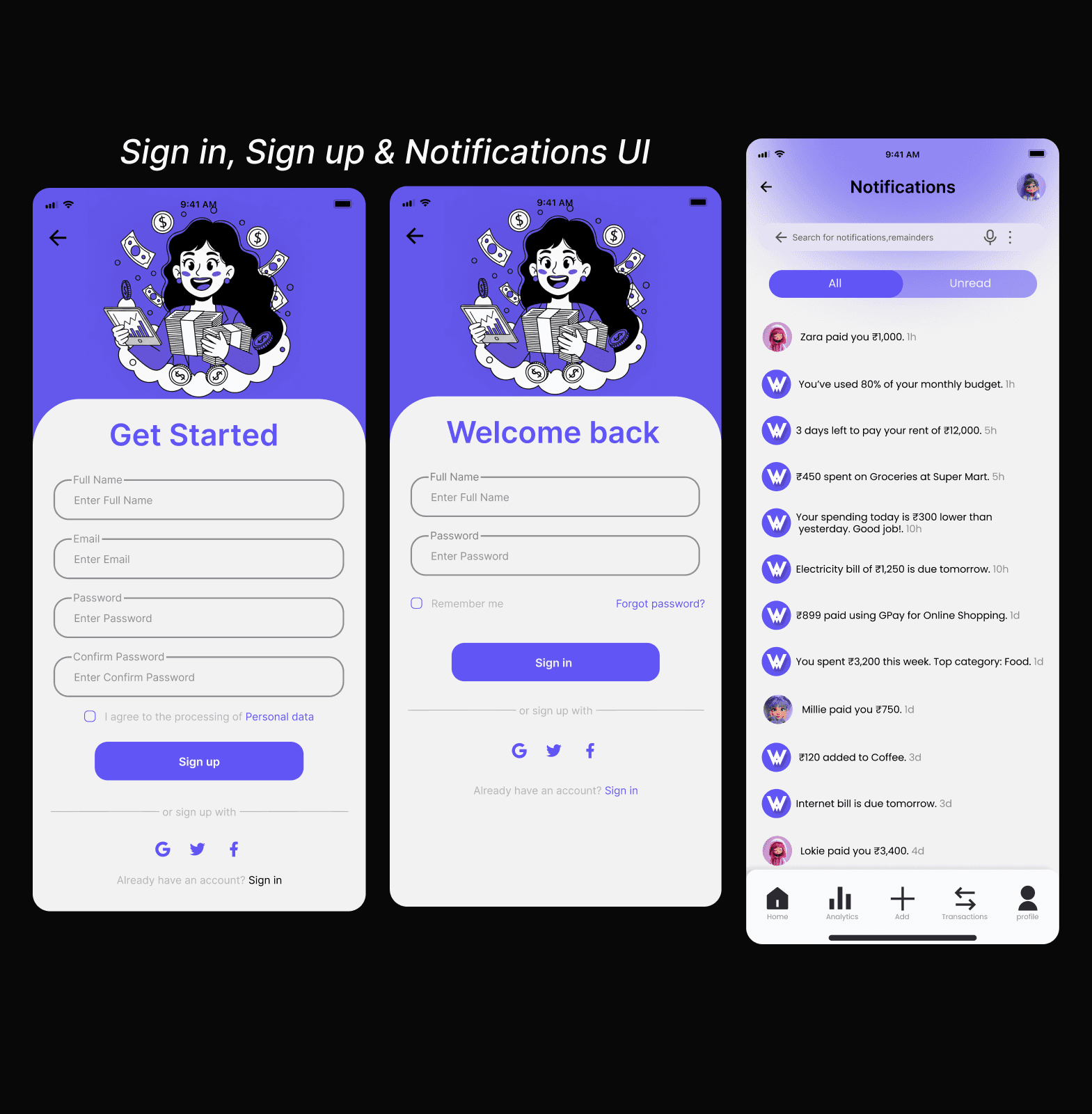
Walletix is structured around five core modules designed to separate overview, action, insight, and control:
1. Home (Dashboard Layer)
Provides instant budget visibility, income-expense summary, and quick access to core actions.
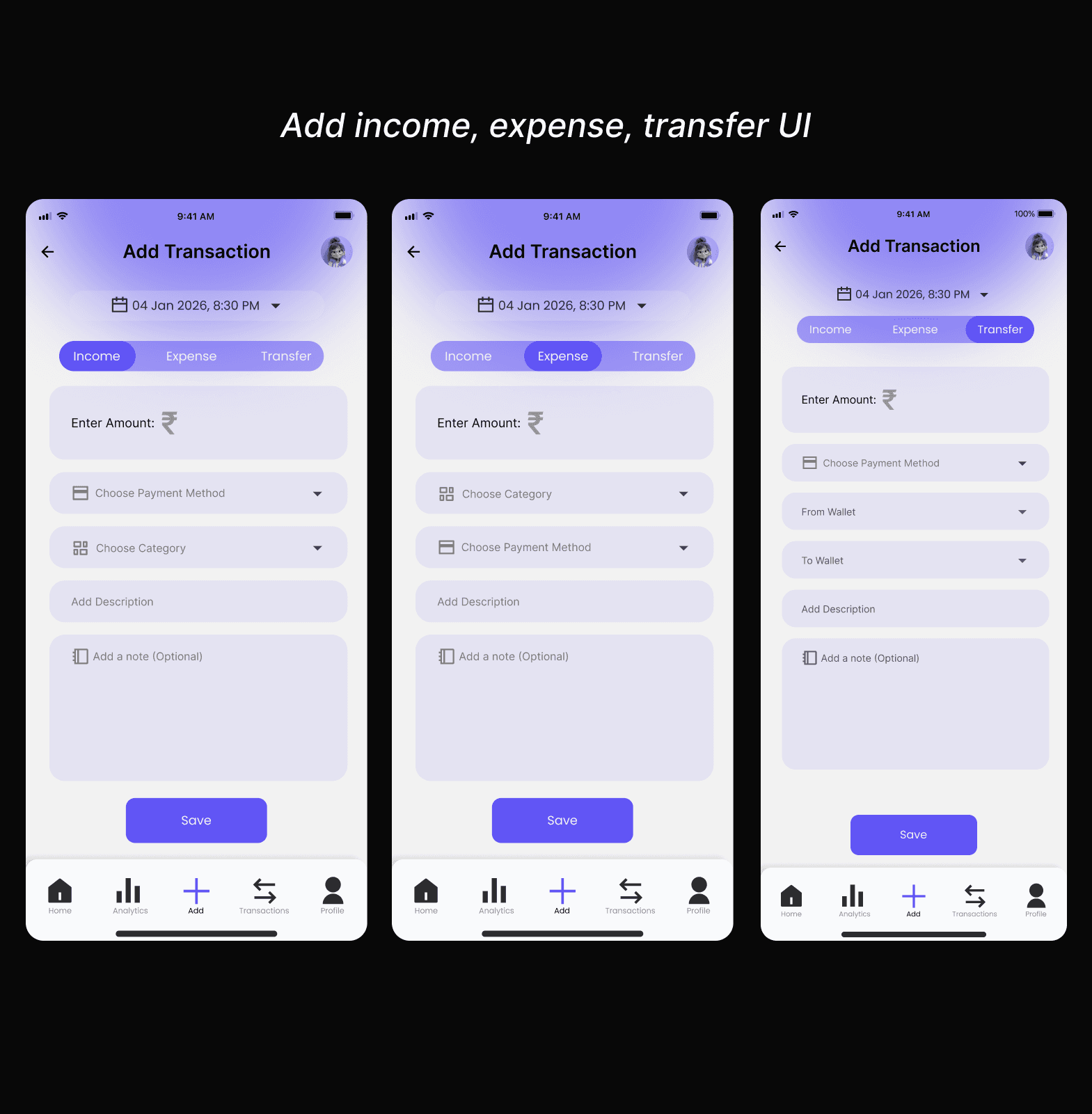
2. Transaction Module
Handles Income, Expense, and Transfer entries, updating financial data in real time.
3. Analytics Engine
Processes transaction data to generate category breakdowns, payment-method insights, and trend summaries.
4. Account & Payment Management
Manages linked payment methods and account structures to enable behavior-based tracking.
5. Profile & Settings
Controls personalization, security preferences, and system configuration.
This modular structure ensures clear separation of concerns while maintaining a cohesive user flow across the app.
Reflections.
Walletix helped me move beyond designing individual screens to thinking more intentionally about structure and prioritization. Through iteration, I realized that clarity and hierarchy are more important than adding features, especially in financial products where users need quick understanding. This project strengthened my ability to translate behavioral observations into a focused product experience while maintaining simplicity and usability.
Design Philosophy.
Clarity, structure, and intention guide my design process. I believe effective digital experiences emerge from strong information architecture, thoughtful interaction, and systems-driven thinking.

Annie David
Product Designer, Traditional & Digital Artist