INDUSTRY:
Entertainment Technology
TYPE:
Self-Initiated Conceptual Product Design
YEAR:
2026
TIMELINE:
16 Days
Project Overview.
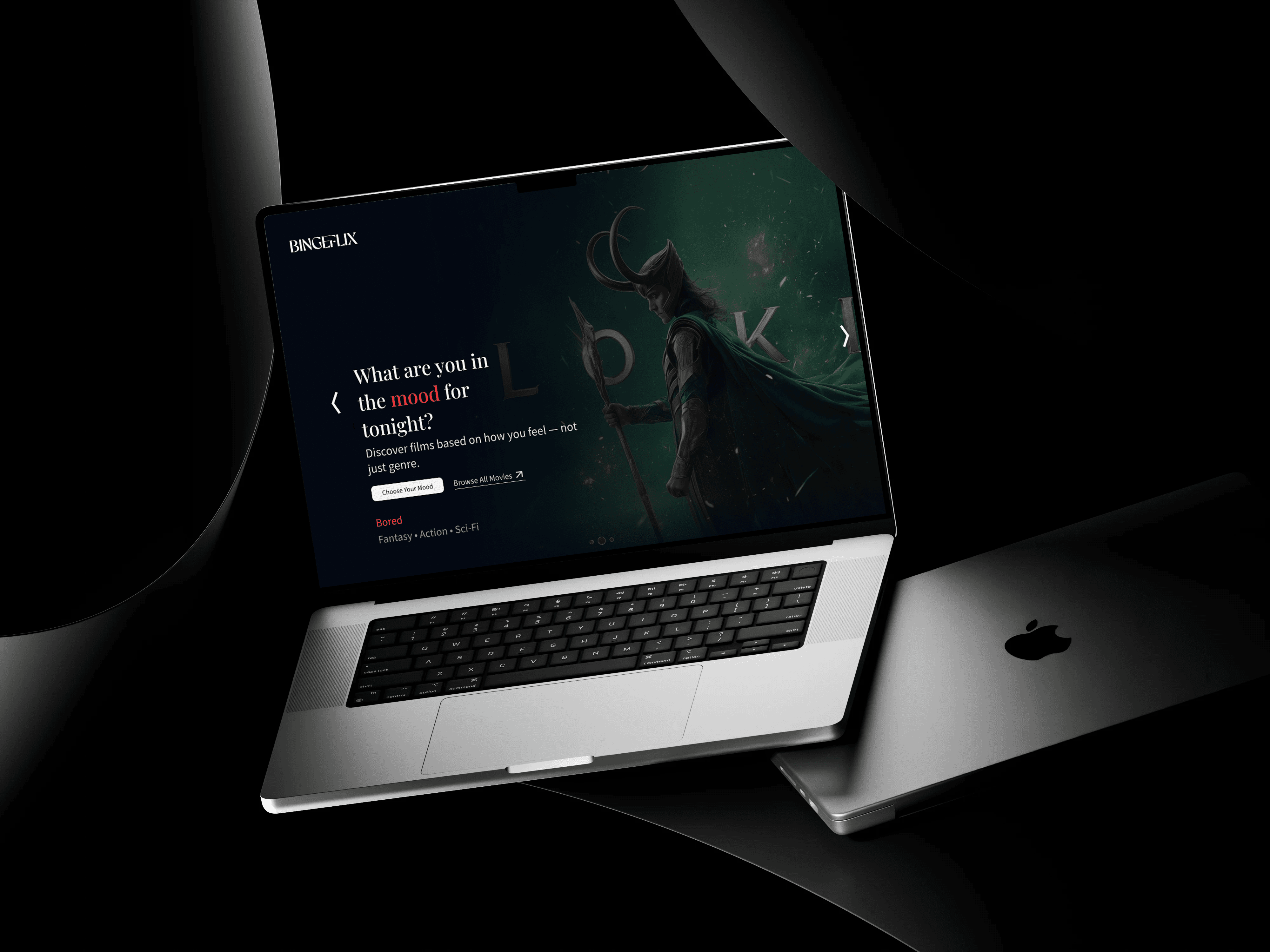
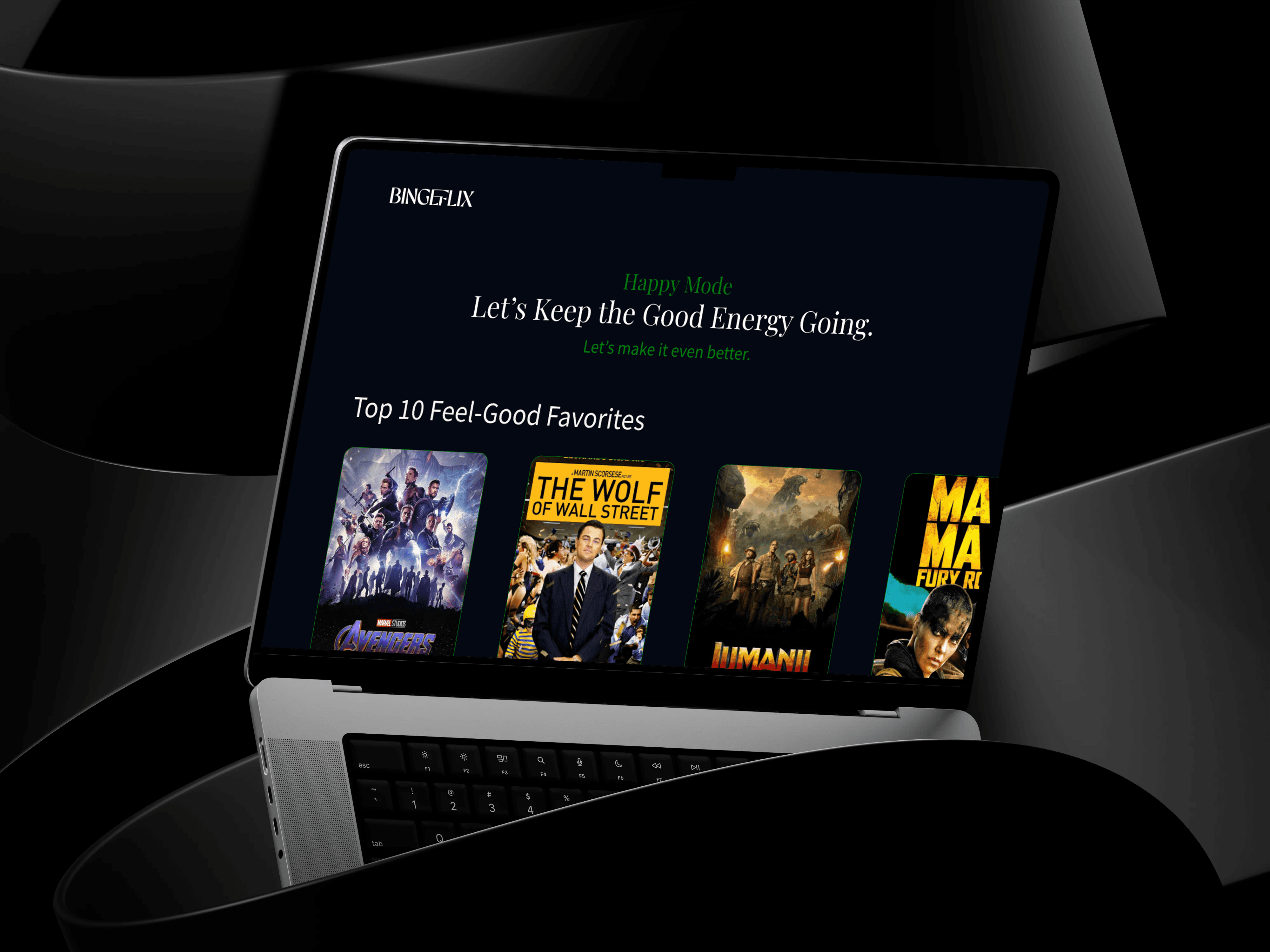
BingeFlix is a mood-first streaming concept that reimagines content discovery through emotional context. Instead of browsing through genres or algorithm-driven feeds, users begin by selecting how they feel. The platform then generates a curated environment designed to improve, balance, or amplify that mood.
The project explores how emotional architecture, dynamic accent systems, and structured mood tagging can reduce decision fatigue in modern streaming experiences while maintaining visual clarity and system consistency.
Problem Statement.
Streaming platforms often rely on genre filters and algorithm-driven feeds, but users frequently open them without knowing exactly what they want to watch. Endless browsing and overwhelming content libraries create decision fatigue, while emotional context is rarely considered during content discovery.
Core Insight.
Users often don’t know what they want to watch, but they usually know how they feel. Emotional context can therefore become a clearer and more intuitive starting point for content discovery than genre or past viewing behavior.
Key Decisions.
Made mood the primary entry point instead of treating it as a filter layered on top of traditional browsing.
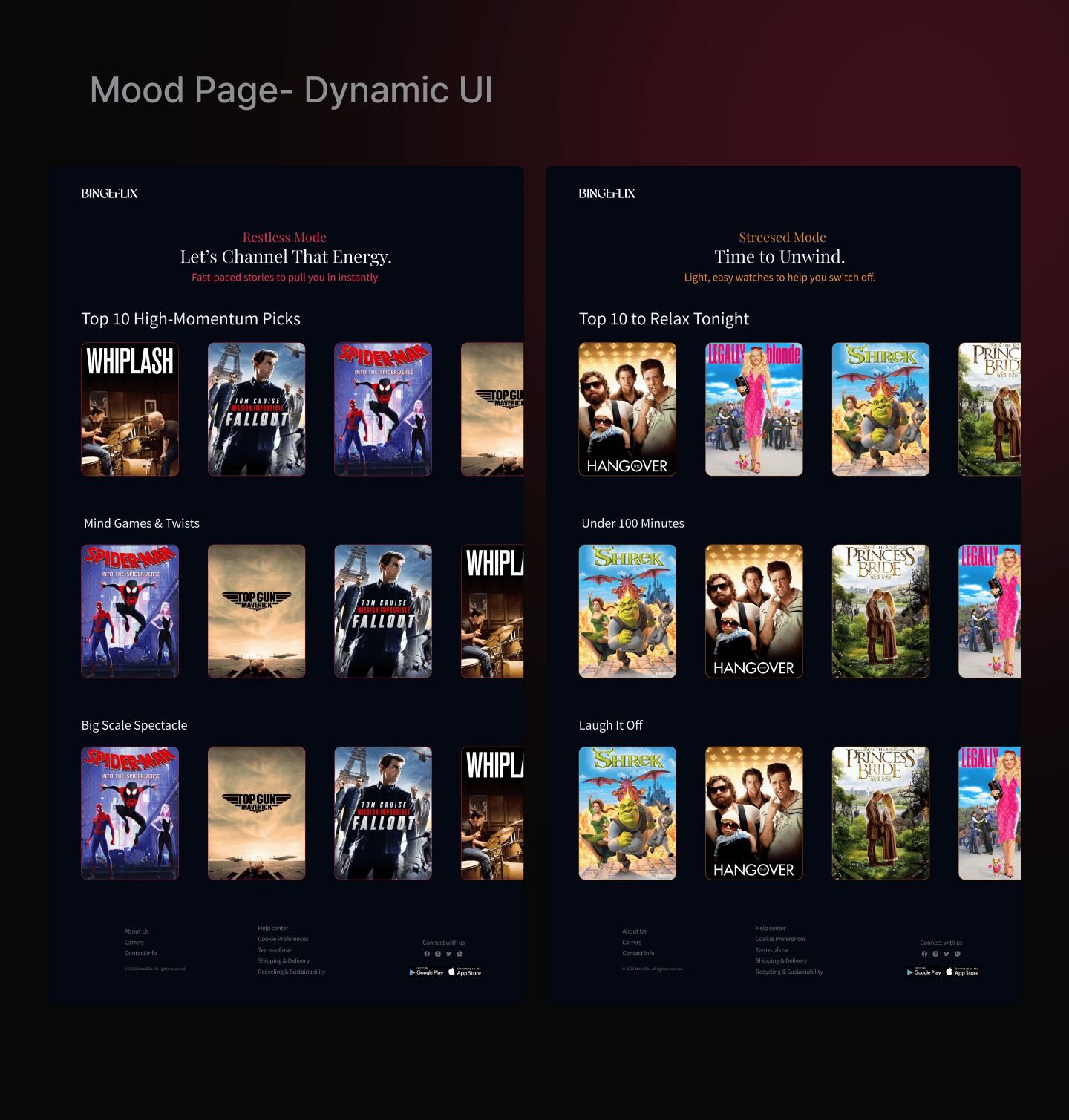
Assigned one primary emotional category per title to maintain visual clarity and avoid duplication across mood pages.
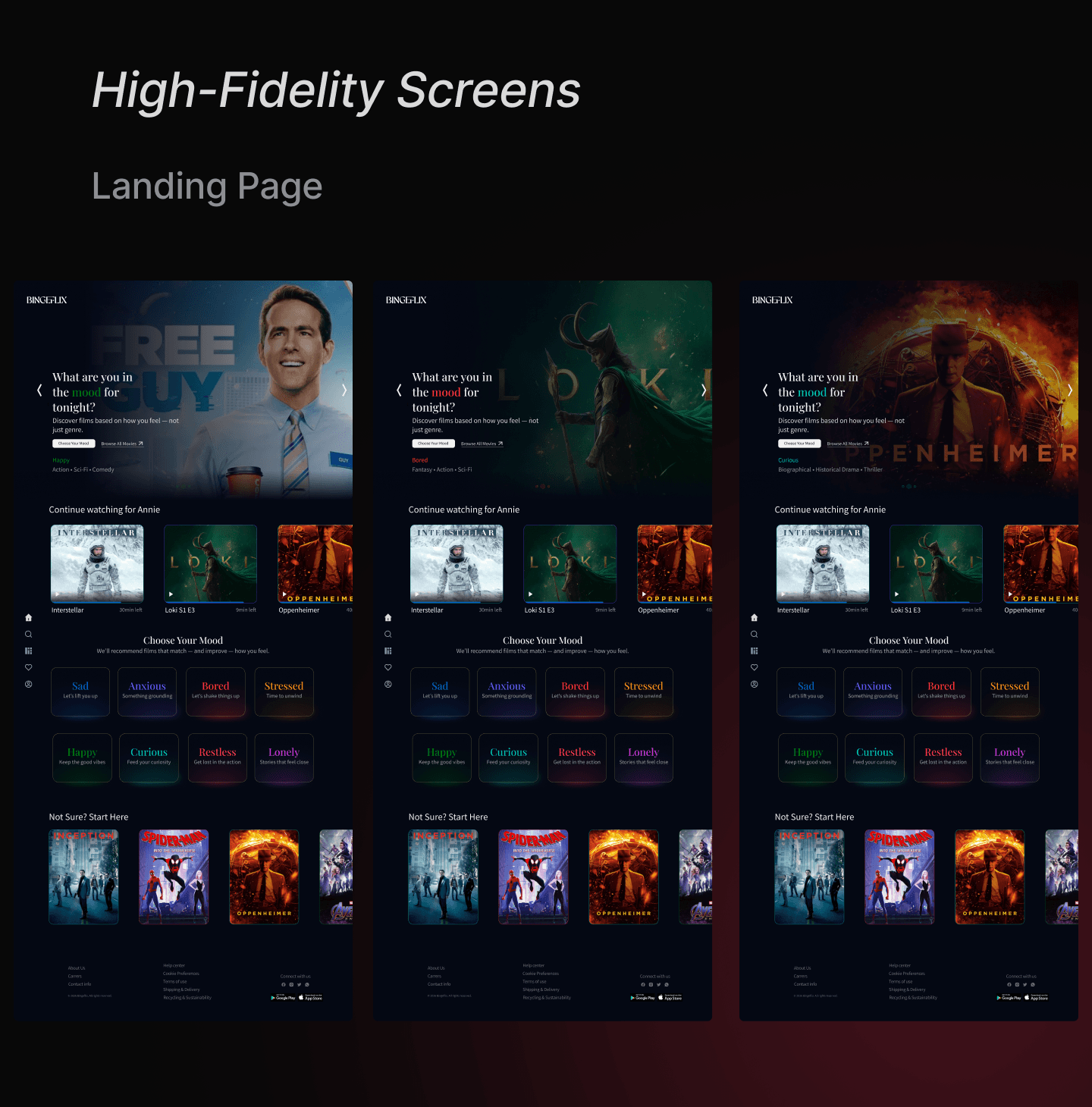
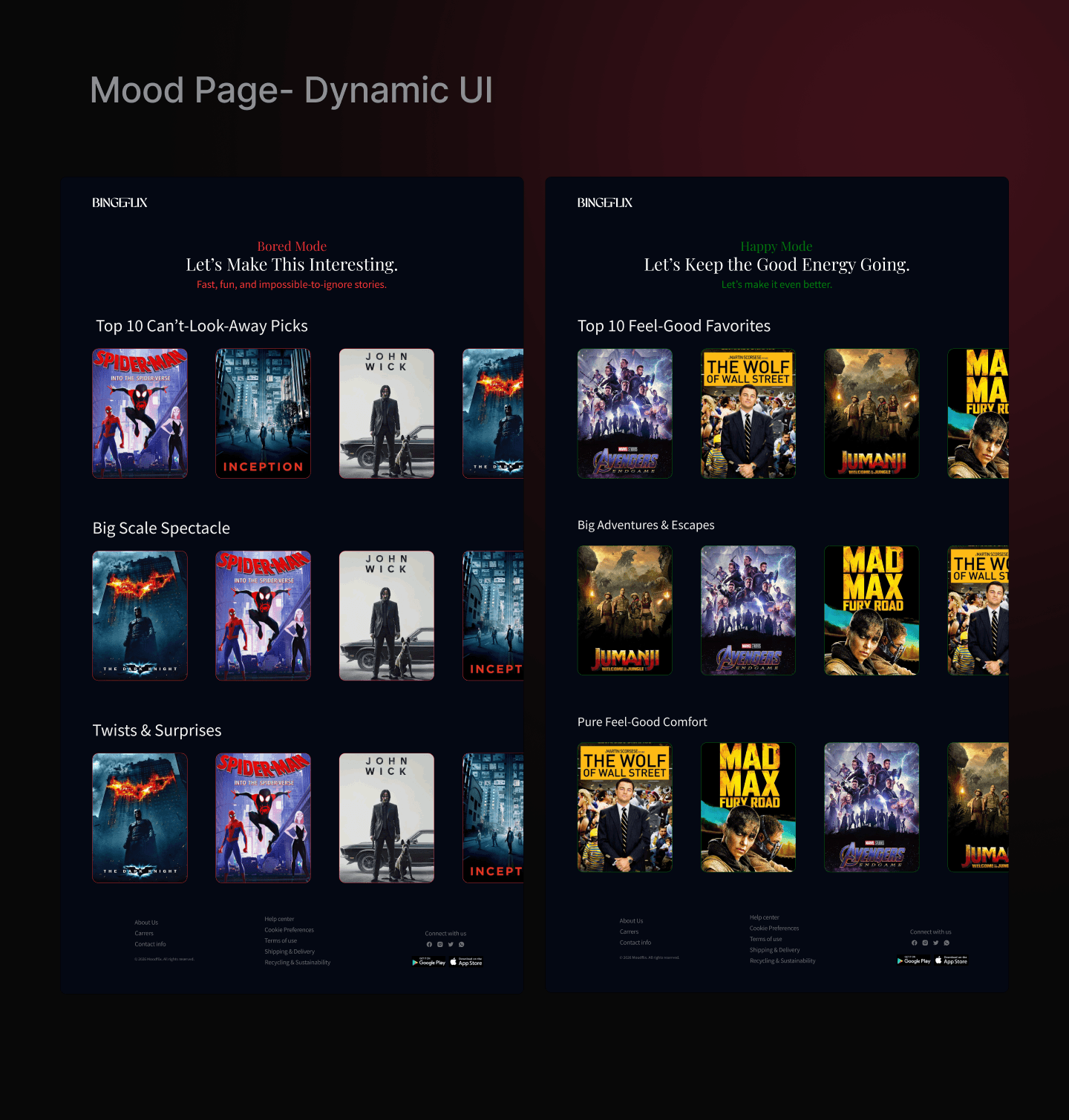
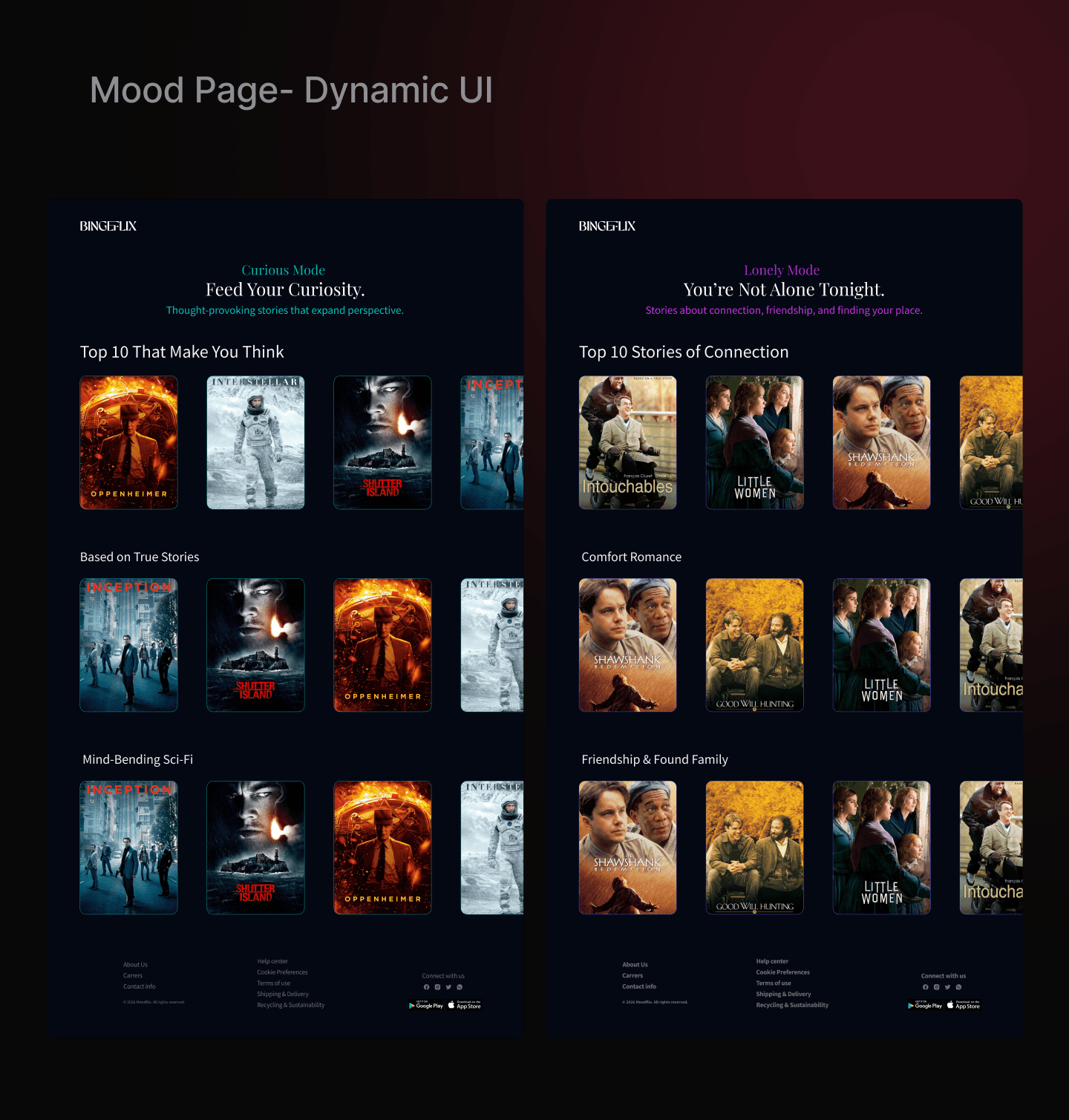
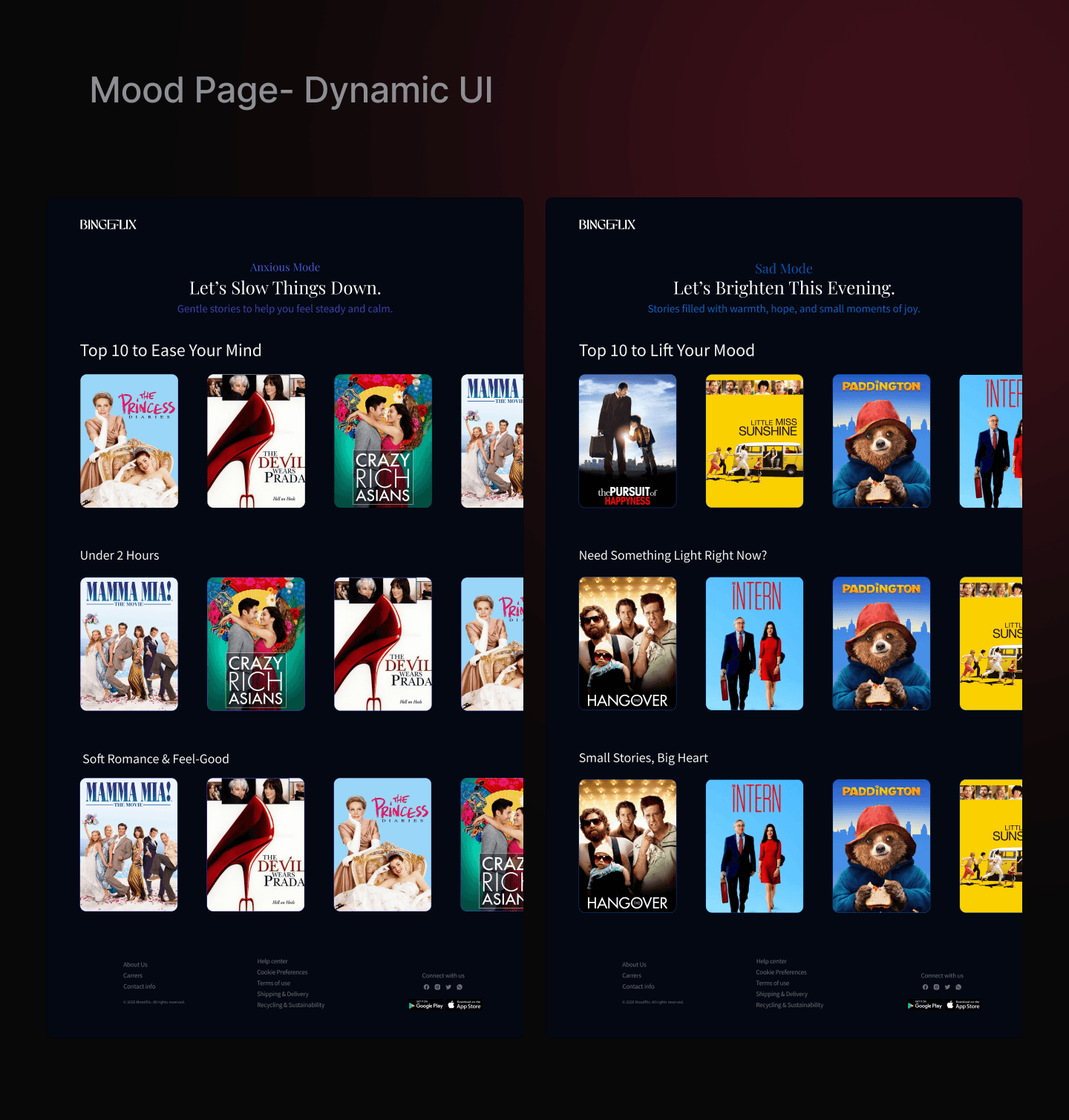
Used dynamic accent colors based on mood to reinforce emotional context while keeping the interface visually consistent.
Standardized the structure of mood pages so each emotional environment feels familiar and easy to navigate.
Prioritized emotional regulation over reinforcement, recommending content that can improve or balance a user’s mood.
Iteration.
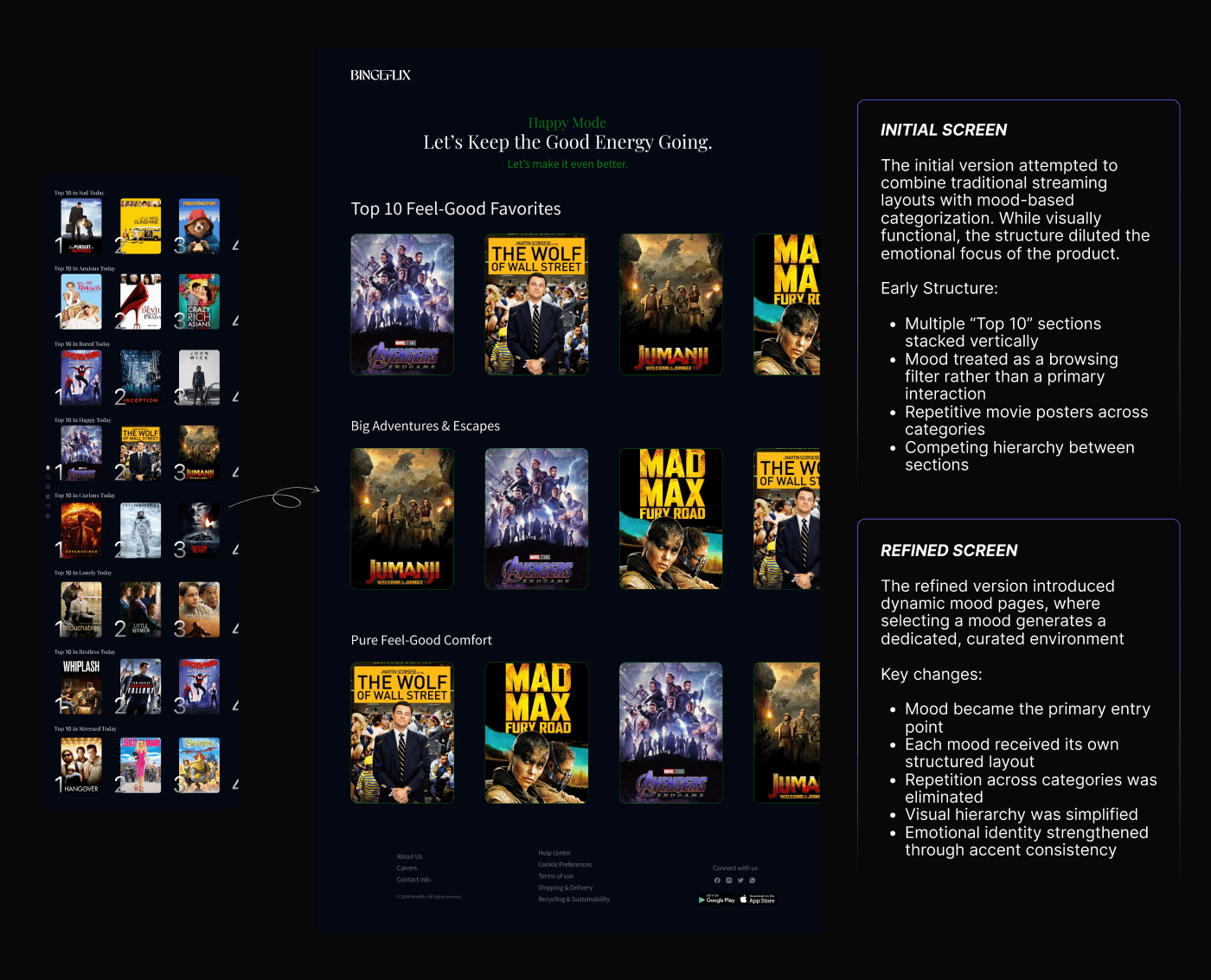
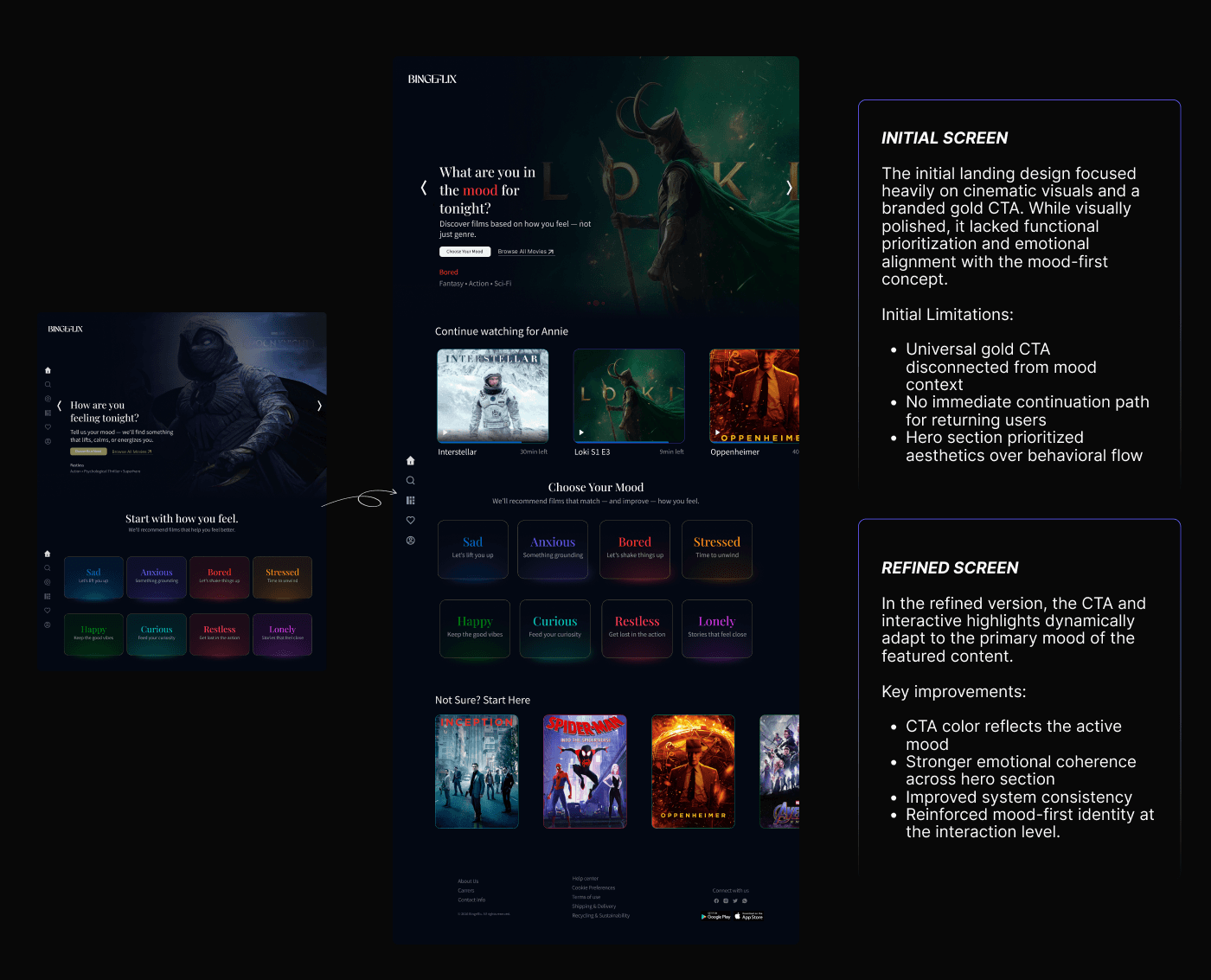
Early explorations treated mood as a secondary filter layered onto a traditional streaming layout, resulting in stacked content sections and competing hierarchy. This made the experience feel dense and unfocused.
Through iteration, mood became the primary entry point. The design shifted to dynamic mood pages with consistent structure and contextual accents, creating a clearer and more intentional discovery experience.
System Architecture.
BingeFlix is structured around a mood-first tagging system where each title is assigned a primary emotional category. This category determines how content appears within dynamic mood pages, allowing the interface to adapt visually and structurally based on the selected mood.
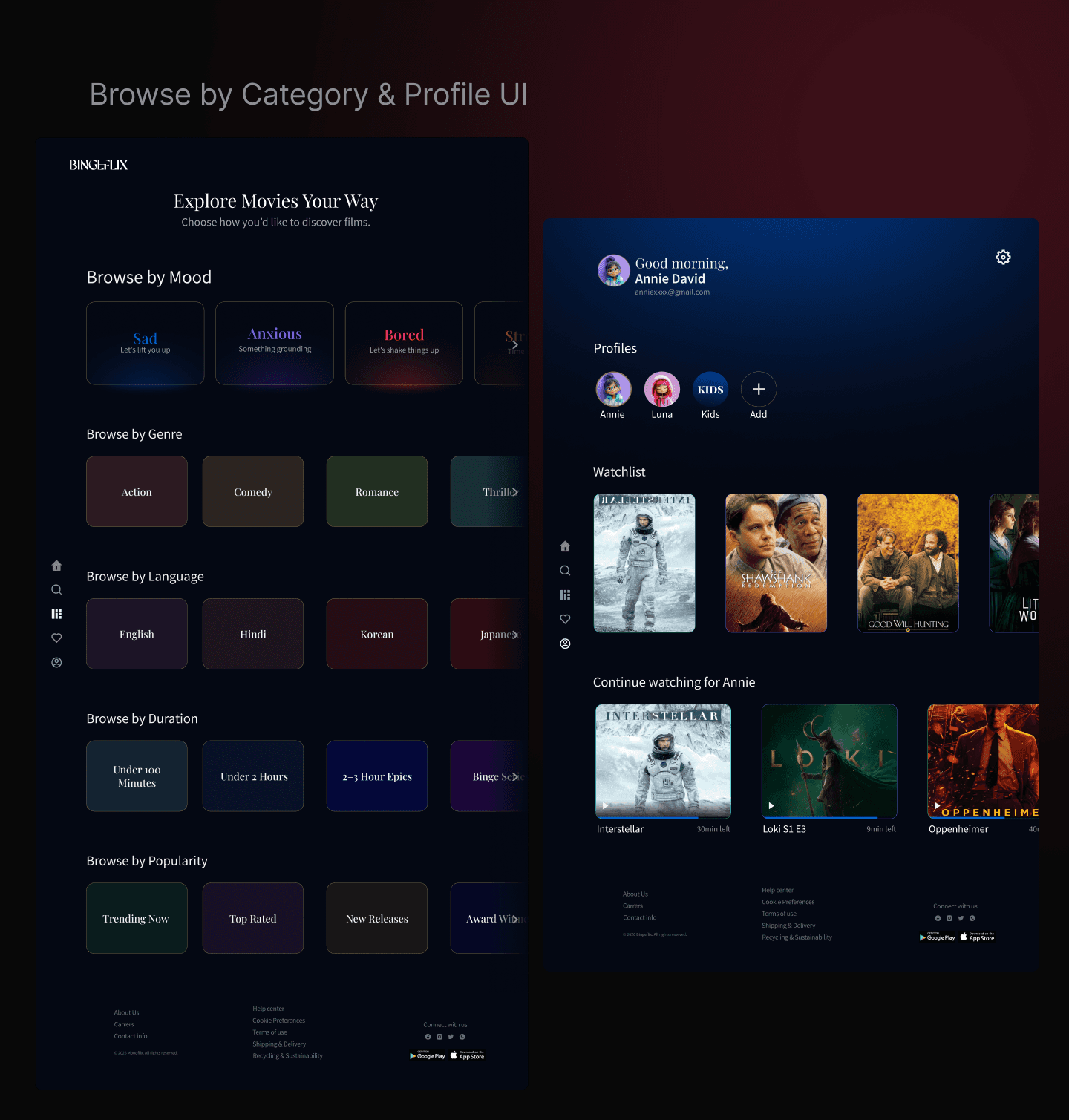
Traditional metadata such as genre, language, and duration remain accessible through secondary browsing paths. This architecture allows emotional context to drive the primary discovery experience while maintaining scalability and flexibility in the content system.
Reflection.
BingeFlix helped me shift from designing individual screens to thinking in systems. I learned that emotional concepts require clear structure and restraint, not just visual styling. Iterating from a stacked layout to dynamic mood pages reinforced the importance of hierarchy, consistency, and intentional product decisions when designing adaptive interfaces.
Design Philosophy.
Clarity, structure, and intention guide my design process. I believe effective digital experiences emerge from strong information architecture, thoughtful interaction, and systems-driven thinking.

Annie David
Product Designer, Traditional & Digital Artist